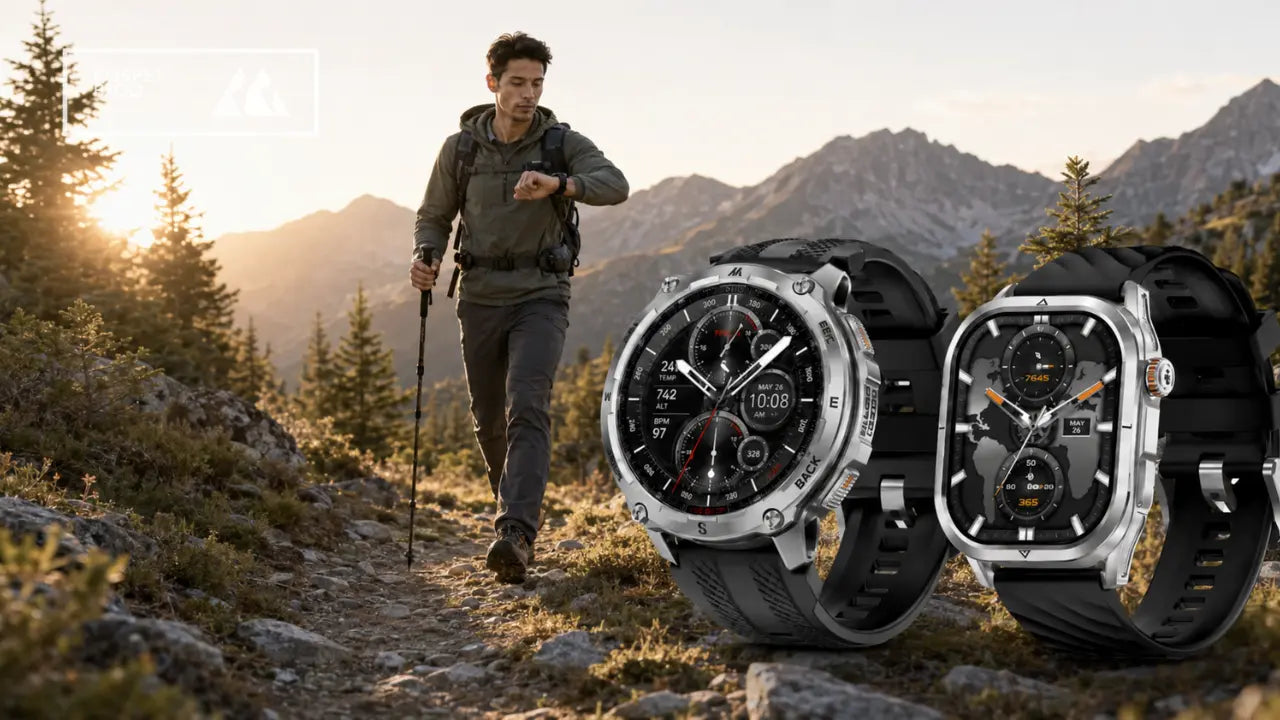
A watch battery dies before camp. A trail divides while the phone sits at the bottom of a pack. Rain makes the touchscreen difficult to control. A bulky case rubs the wrist after hours of walking. These are the problems a backpacking watch needs to solve.
Choosing among rugged smartwatches for outdoor use starts with four practical requirements: GPS runtime, navigation type, trail usability, and fit. Feature count comes later.
| Backpacking situation | Watch capability that solves it |
|---|---|
| Long days or several nights between charges | Enough continuous-GPS battery for the entire charging gap |
| Marked trail with a phone used for maps | Track recording and Route Back |
| Planned route with frequent junctions | Imported route and off-course alerts |
| Unfamiliar terrain with the phone packed away | Offline map with the route visible on the wrist |
| Rain, mud, gloves, or layered clothing | Physical controls, bright display, and a low-snag case |

Which Backpacking Watch Fits Your Trip?
Choose for the hardest part of the trip, not the average day. Record the longest walking day, GPS hours per day, days between charges, route complexity, and the role of the phone. Marked trails need less wrist navigation, while regular hut power reduces the battery requirement.
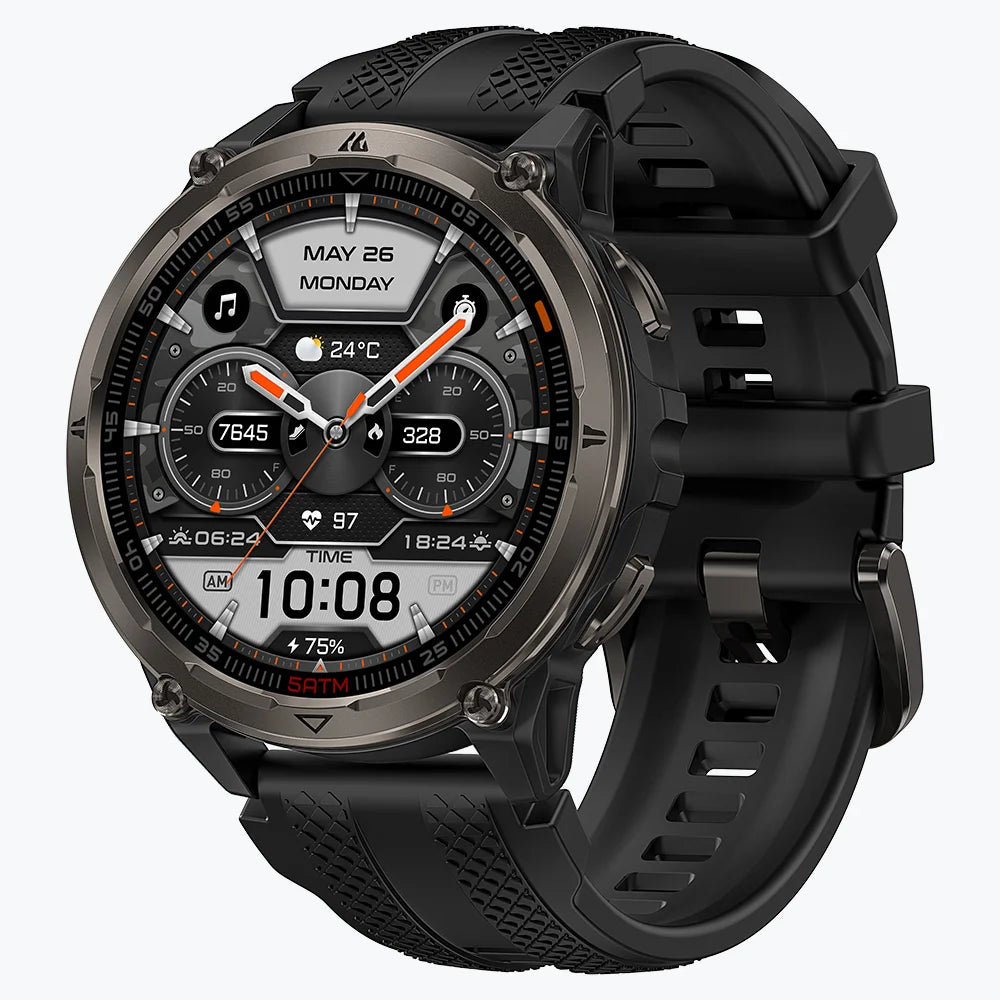
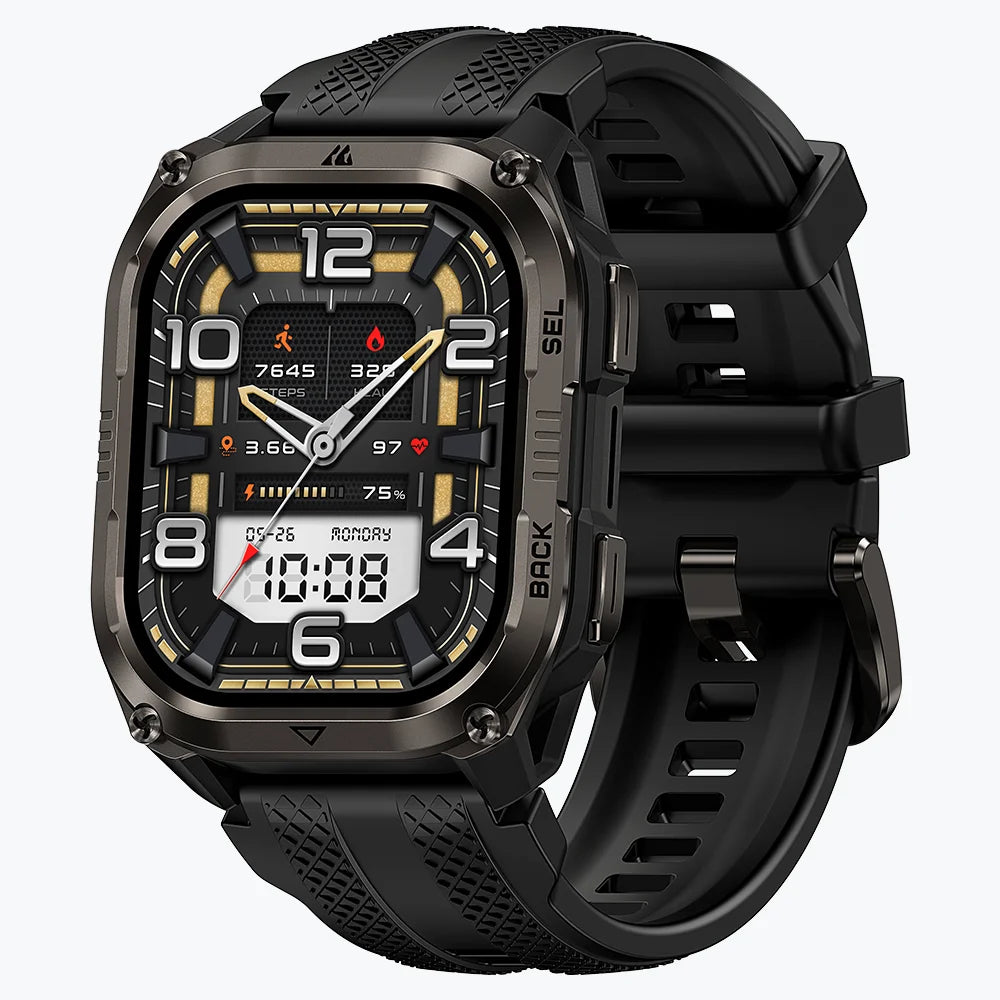
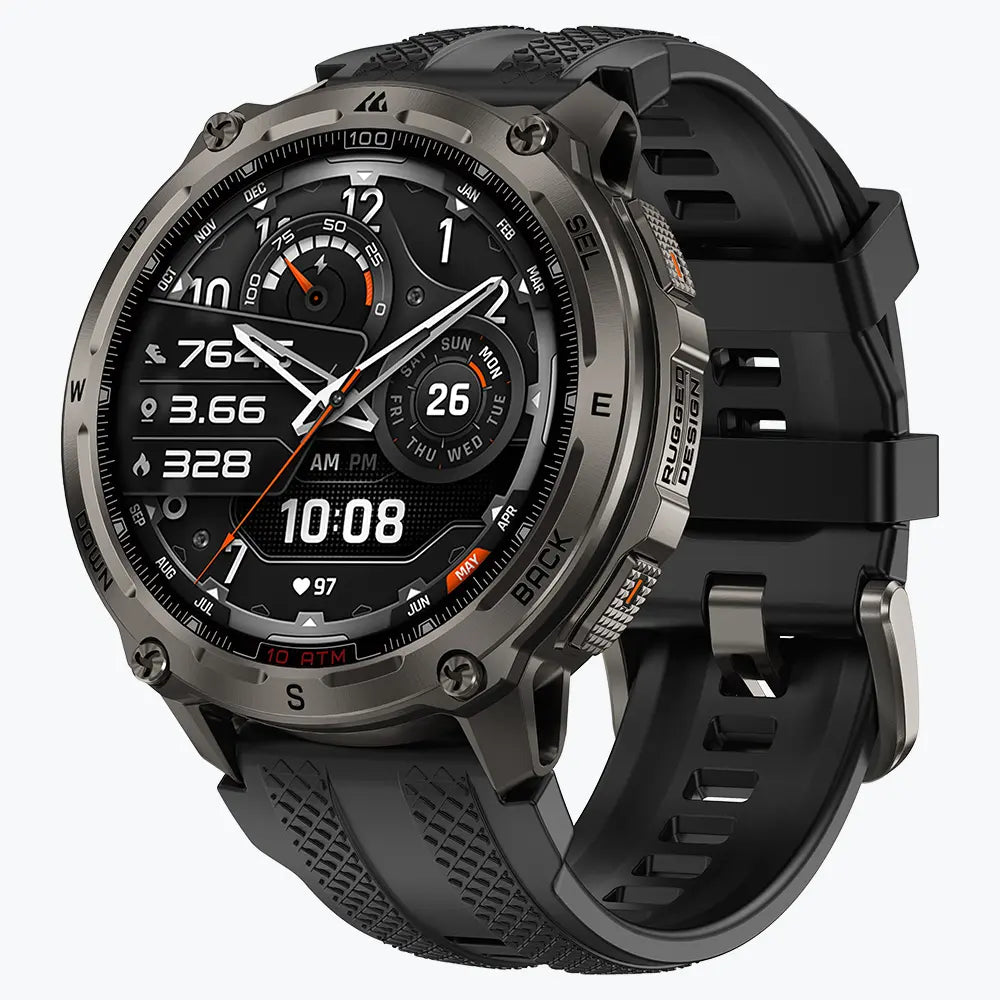
For hiking and trekking, useful functions include independent GPS recording, elevation data, a compass, and return guidance. The KOSPET TANK T3 Ultra 2 supports that tracking-focused use with dual-band GNSS, Route Back, a compass, a barometric altimeter, and up to 35 hours of continuous GPS operation. It suits hikers who keep detailed maps on a phone but want core trail information available on the wrist.
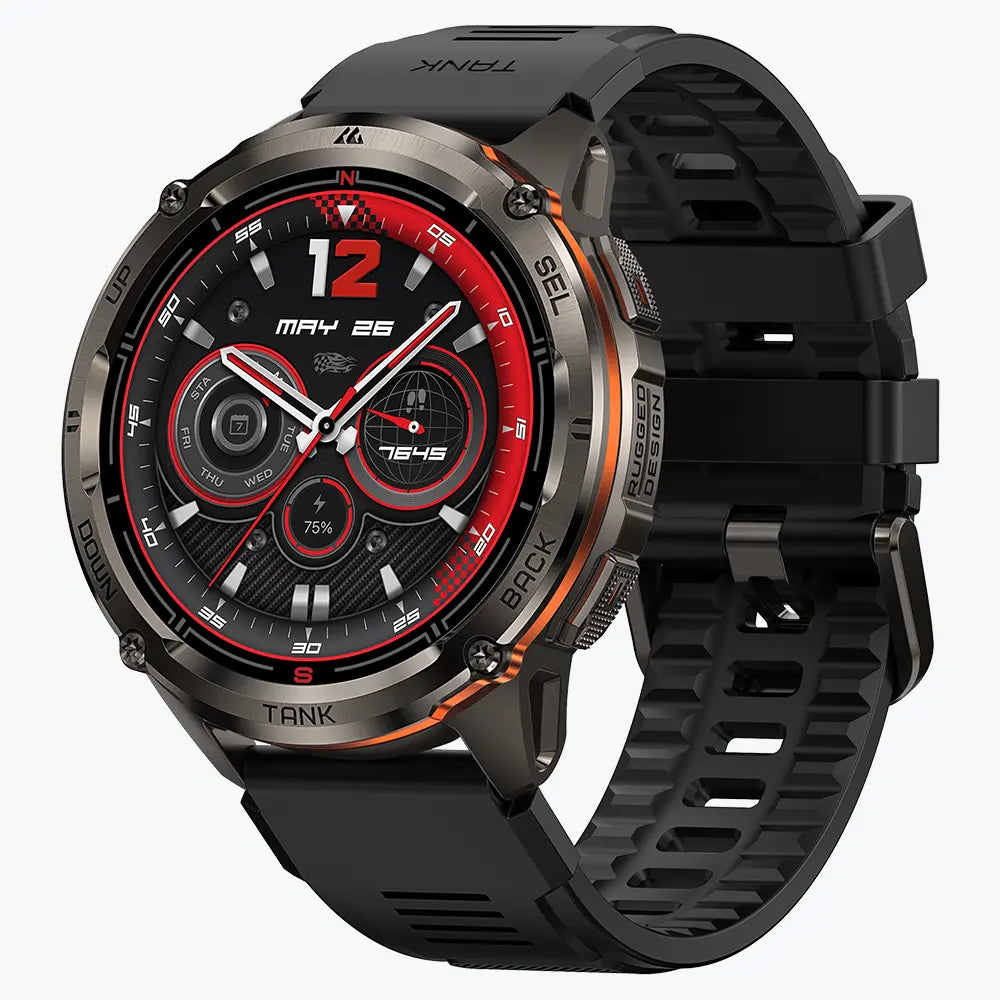
คอสเปต TANK สมาร์ทวอทช์ T3 ULTRA 2
$134.99 USD
Calculate the GPS Battery Life Your Backpacking Trip Requires
Use continuous-GPS runtime rather than everyday smartwatch battery life. Daily-use figures include long periods with satellite tracking turned off.
Required GPS hours = daily tracking hours × days between charges × 1.25
Six hours of tracking per day across three days produces a target of 22.5 hours. The 25 percent reserve covers settings, screen use, temperature, and natural variation from laboratory results.
Maps consume extra power, according to Suunto’s battery-mode guidance. Cold also reduces the temporary performance of lithium-ion batteries, as explained in Apple’s battery documentation. Add more margin for winter travel or frequent map viewing.
A power bank adds energy but does not change the watch’s native runtime. Pack the correct charging cable.
Choose the Right Navigation Level for Backpacking
Navigation features solve three different problems:
- Track recording saves distance and the traveled path. It does not guide the next turn.
- Route guidance displays an imported course, waypoints, or a return trace. It supports decisions along a prepared route.
- Offline maps add nearby trails and geographic context around the course. Automatic rerouting remains a separate feature.
Built-in GPS does not automatically include maps. GPS supplies position data from satellites worldwide, as described by the U.S. government’s GPS overview; map files and route tools come from the watch platform.
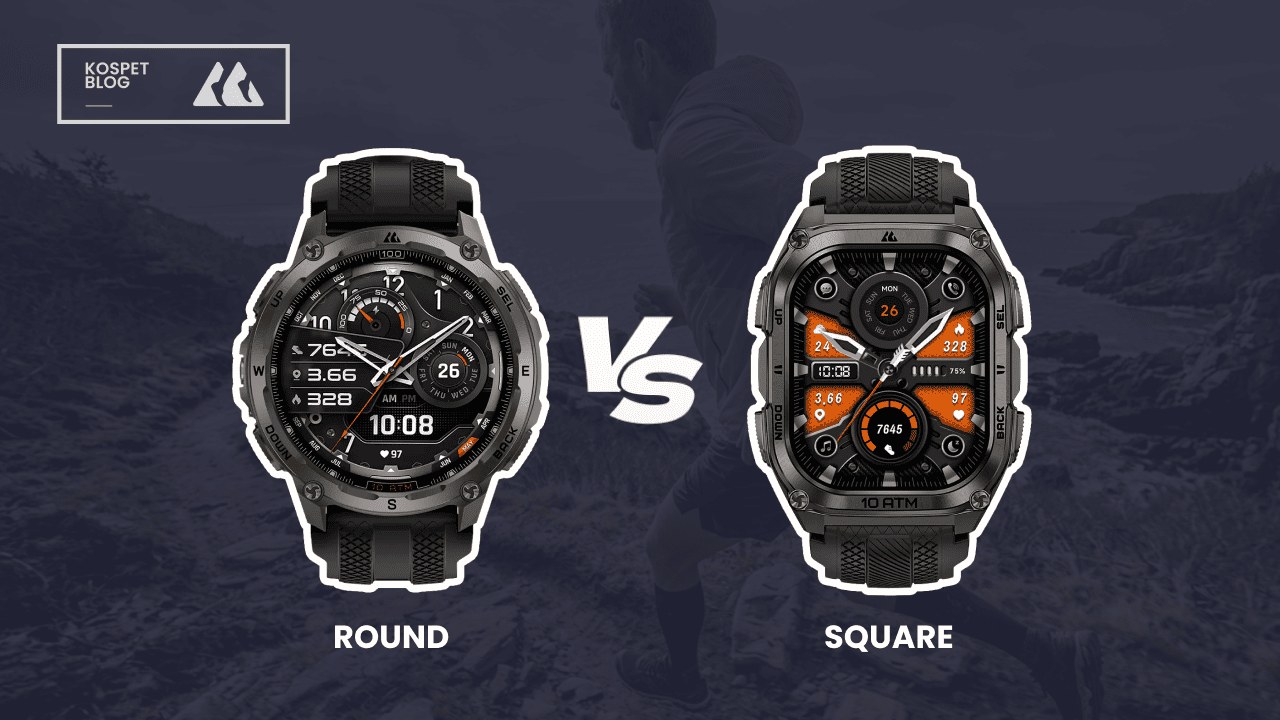
Trail runners reach junctions quickly and gain more from seeing the course without stopping. The KOSPET TANK T4 supports dual-band, six-system GNSS, offline maps, and GPX or KML route imports through Apexmove, keeping a prepared route visible during trail running.
Download the map, import the course, and open it before departure. Keep a phone or paper map for wider-area planning.
Test Men’s Outdoor Watch Fit and Trail Usability
“For men” does not automatically mean a larger case. Wrist width, lug-to-lug length, thickness, weight, and strap adjustment determine comfort.
Wear the watch with a loaded backpack and the clothing planned for the trip. The lugs need to remain inside the wrist, while the bezel needs to clear jacket cuffs and shoulder straps.
Test the actions used outdoors: start GPS, open navigation, operate the controls with gloves, and read the display in direct sunlight. The strap needs to stay secure without excessive tightness.
Backpacking Watch Features Worth Paying For
Pay first for enough GPS runtime, the required navigation type, sunlight readability, reliable controls, stable route syncing, and comfortable construction. These features affect every trail day.
Spend on dual-frequency GNSS for dense forests, narrow canyons, or steep rock faces. Offline maps earn their cost on unfamiliar routes. Solar helps on exposed trails, while an altimeter, barometer, and compass support mountain travel.
Match water resistance to the activity. Garmin’s water-rating definitions connect ratings such as 5 ATM and 10 ATM with specific water uses. Rain protection, swimming, and diving are different requirements.
Music, payments, extensive notifications, and unrelated sports modes matter only through regular use beyond backpacking.
Verify GPS Watch Claims Before You Buy
Marketing terms need a matching technical detail.
| Product claim | Detail to confirm |
|---|---|
| Long battery life | Continuous-GPS hours in the selected satellite and map mode |
| Offline maps | Full map or route line, supported regions, storage, and download process |
| Route navigation | GPX or KML import, off-course alerts, turn prompts, and rerouting |
| Works without a phone | Functions available after setup and tasks that still require the app |
| Solar charging | Required light intensity and daily exposure time |
| SOS | Phone, network, satellite, account, and subscription dependencies |
| Military-grade | Standard revision and individual tests completed |
| Waterproof | ATM or IP rating and approved water activities |
MIL-STD-810 is a collection of environmental test methods, not one universal durability certificate. The official U.S. Department of Defense record describes the standard as environmental engineering guidance and laboratory tests. Look for the named methods behind the claim.
Complete one test walk during the return period. Load a course, disconnect the phone, record the route, use the return function, and note battery loss.
FAQs
Will a backpacking watch work with both iPhone and Android?
Many models support both systems, but individual functions differ. Check the companion app, minimum operating-system version, route transfer, notifications, message replies, and health-platform connections.
Do offline maps or route features require a subscription?
Charges depend on the brand, map provider, and region. Review map downloads, route planning, file import, and premium services separately. Free route import does not always include free premium maps.
How long does a backpacking watch last before replacement?
Calendar age alone provides a poor answer. Replacement becomes relevant once tested GPS runtime no longer covers the trip, physical damage affects reliability, route syncing fails repeatedly, or software support ends.
What is the right way to clean an outdoor watch after a backpacking trip?
Remove grit, rinse an approved water-resistant watch with fresh water, and dry the case and band before charging. Inspect the sensor, buttons, strap fittings, speaker openings, and charging contacts. Follow the manufacturer’s instructions for the specific case and strap material.
After these requirements are met, price, design, and everyday functions can decide the final purchase.