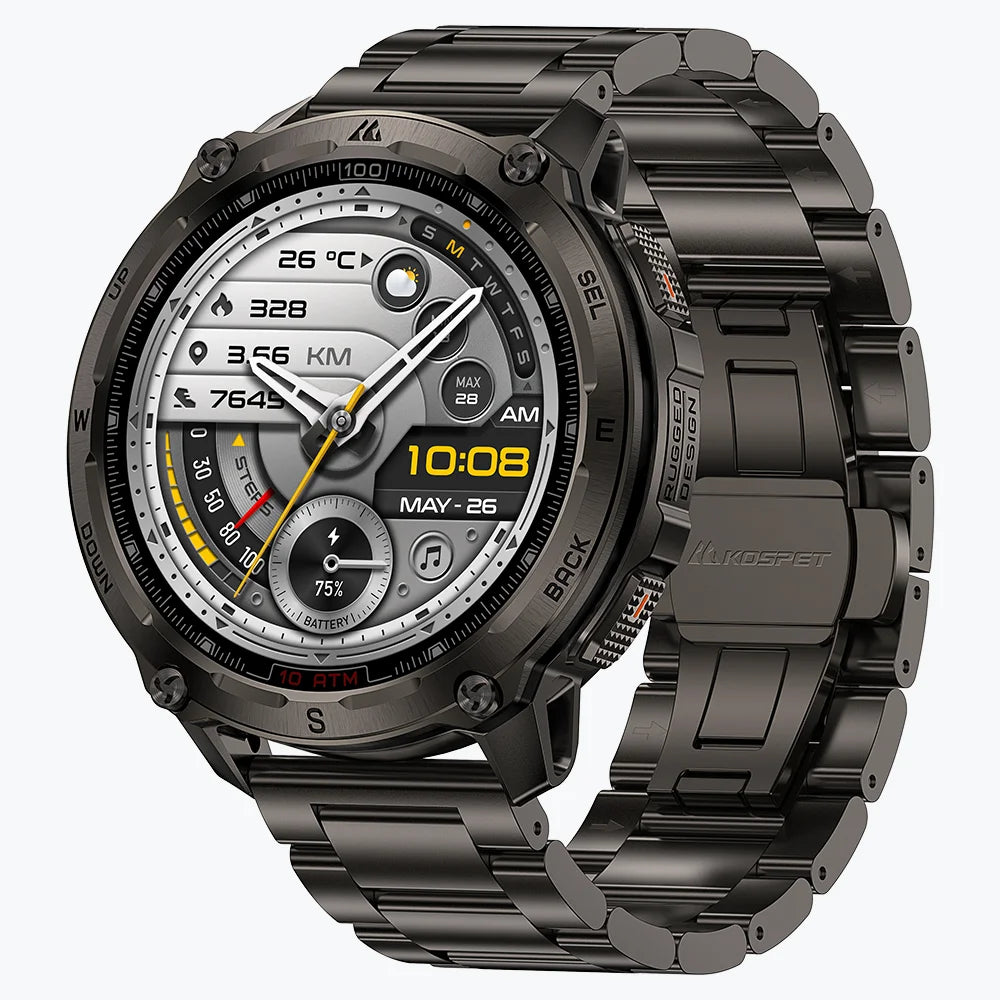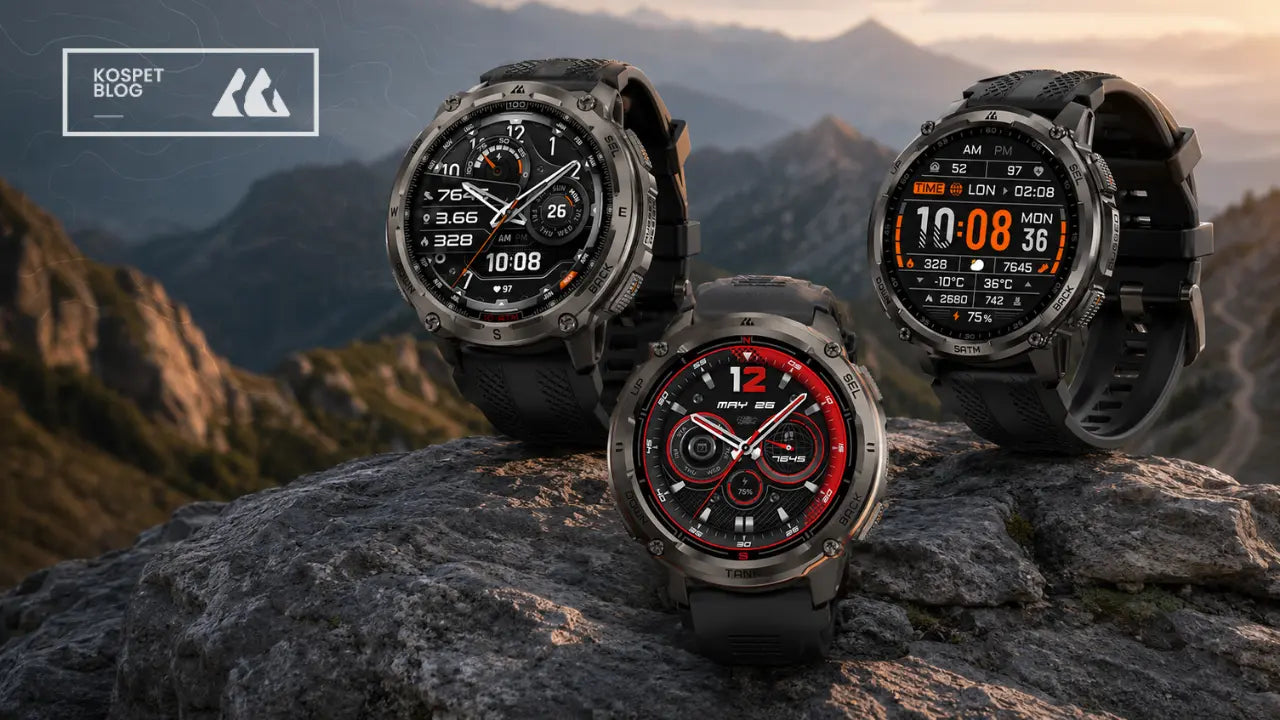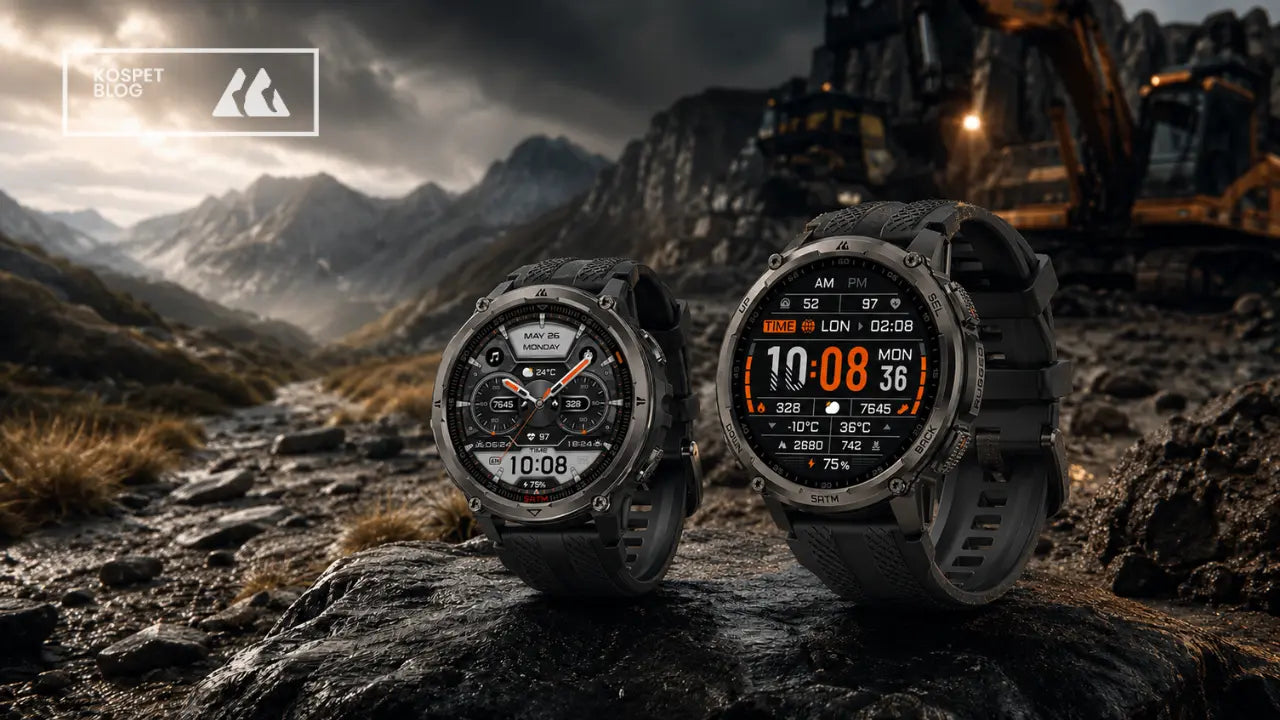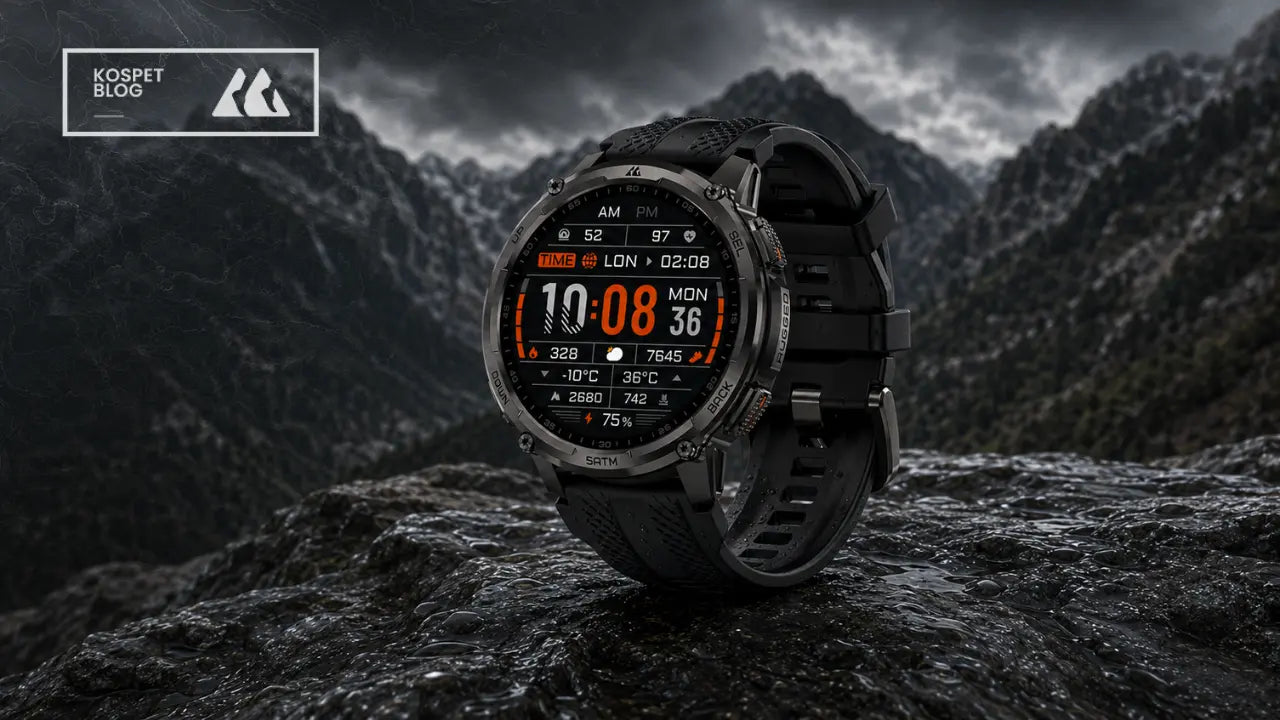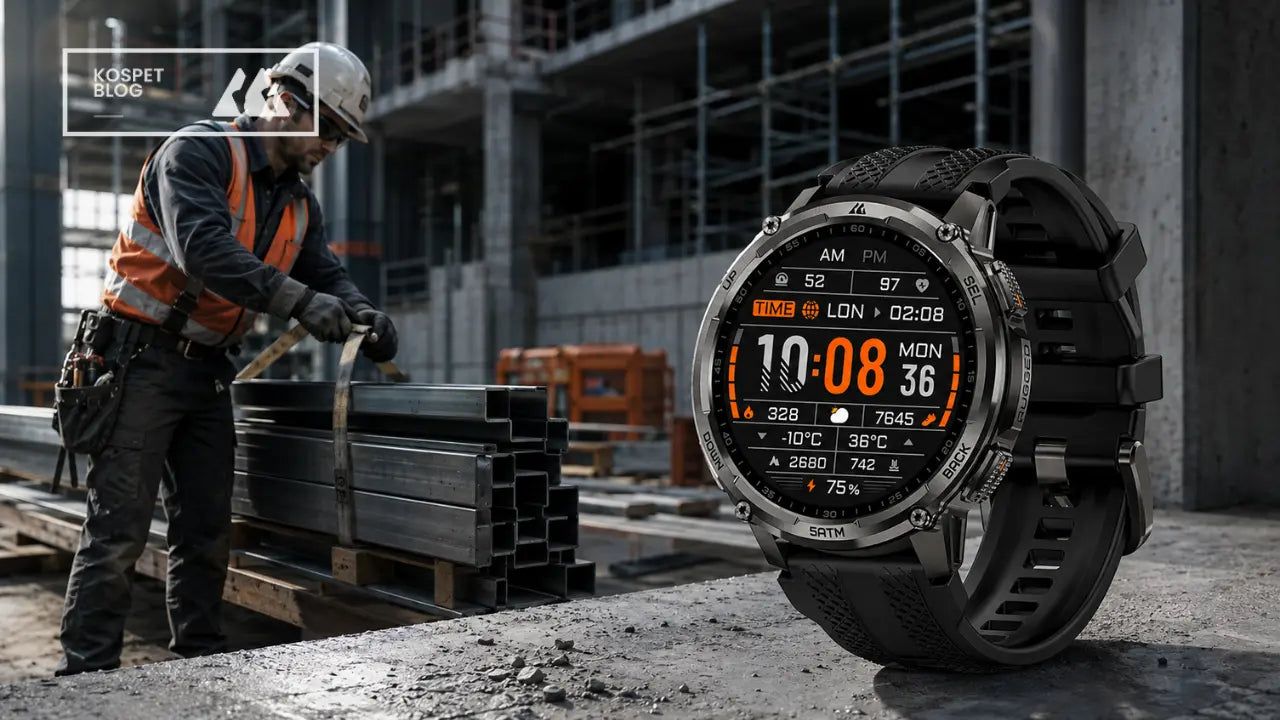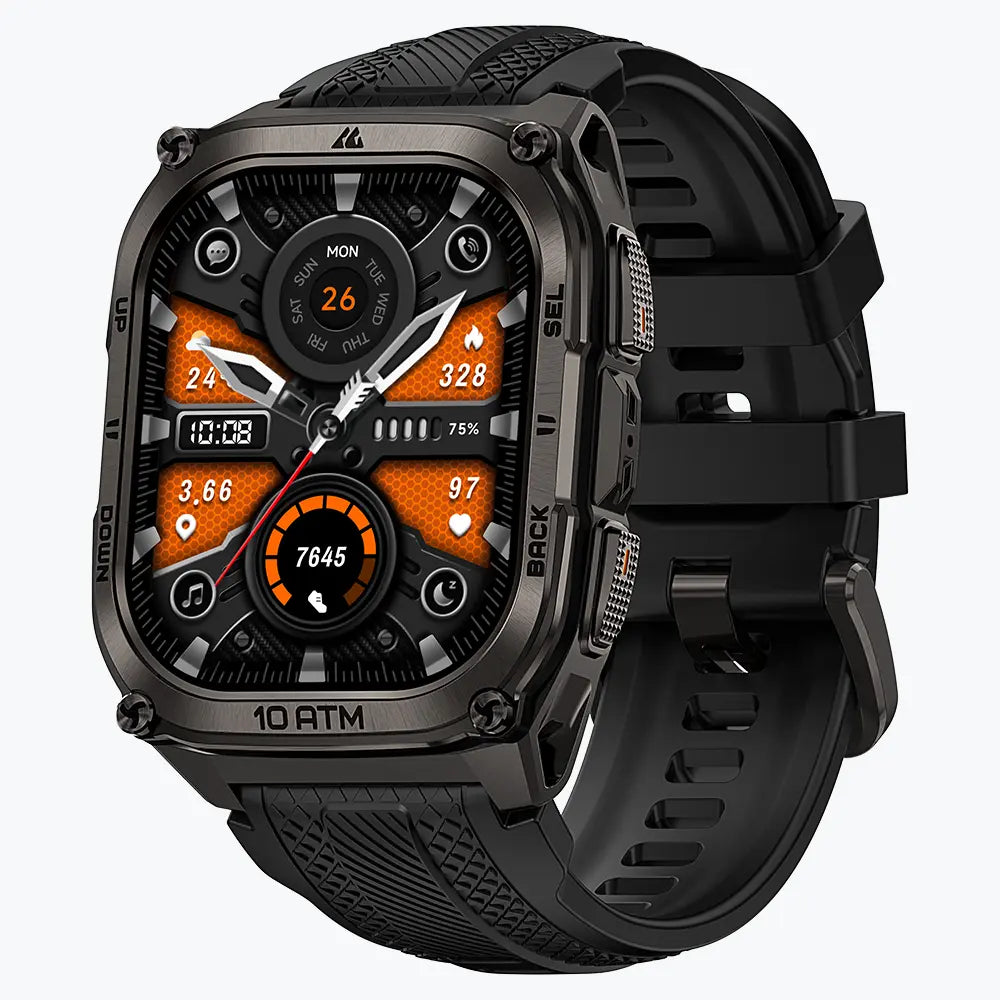
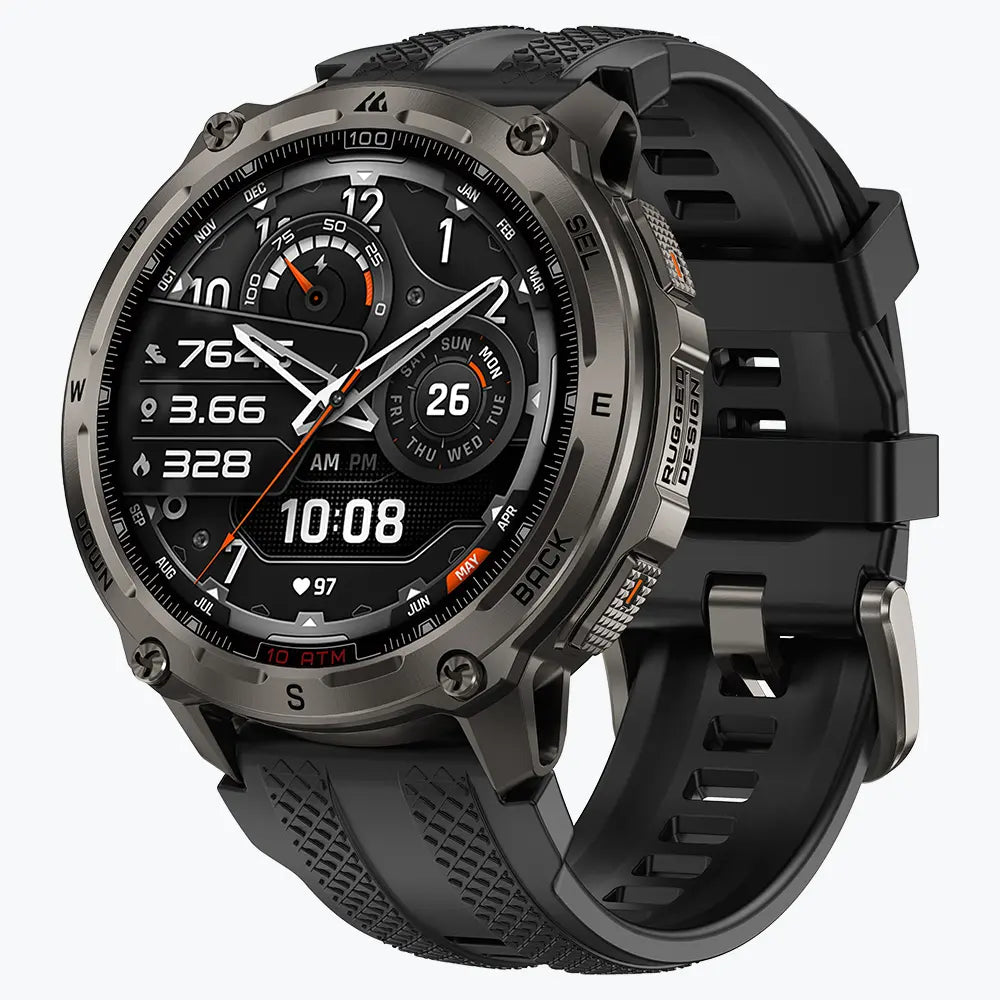
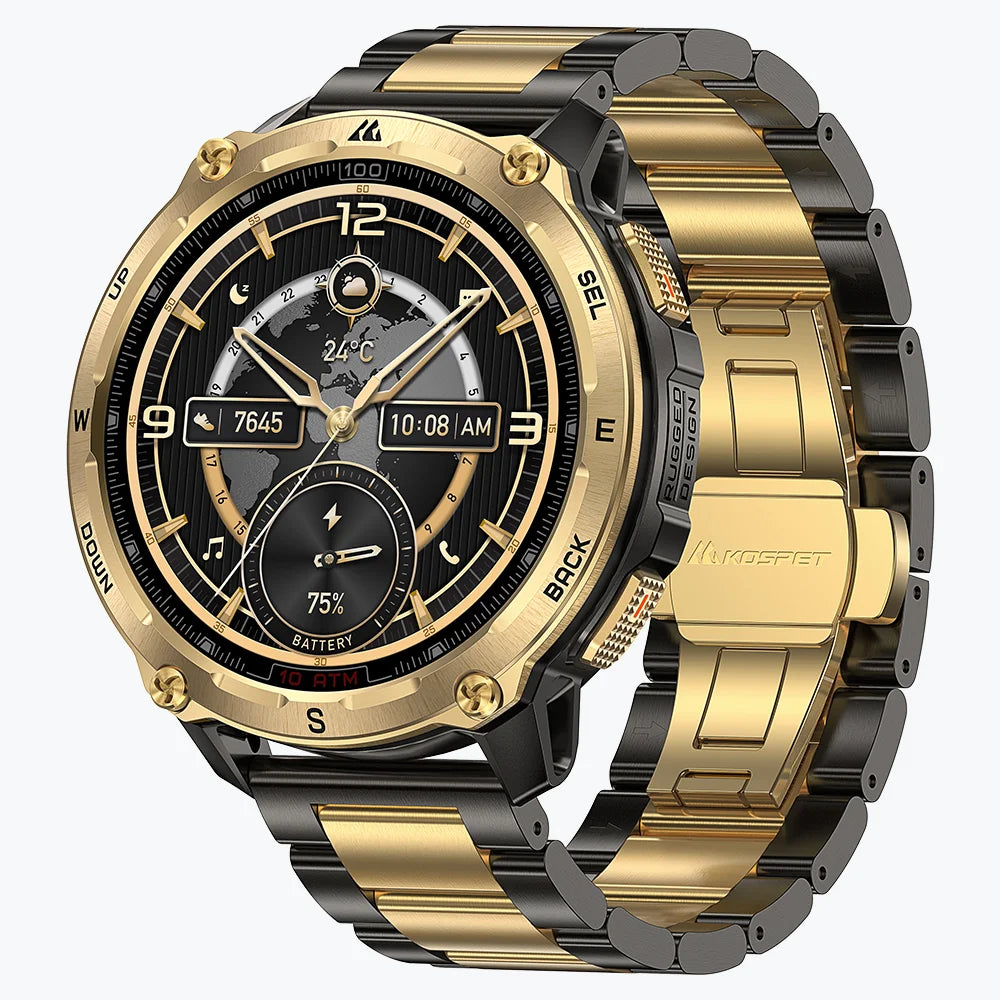
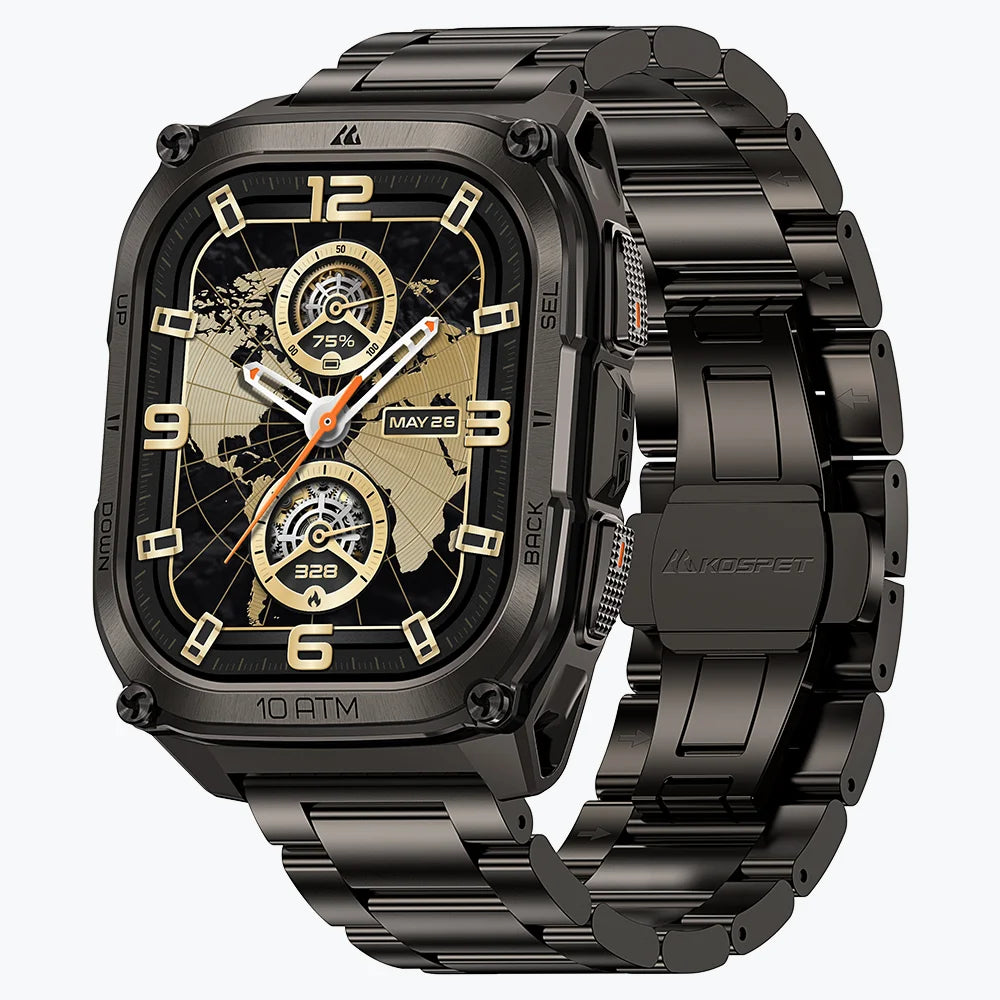
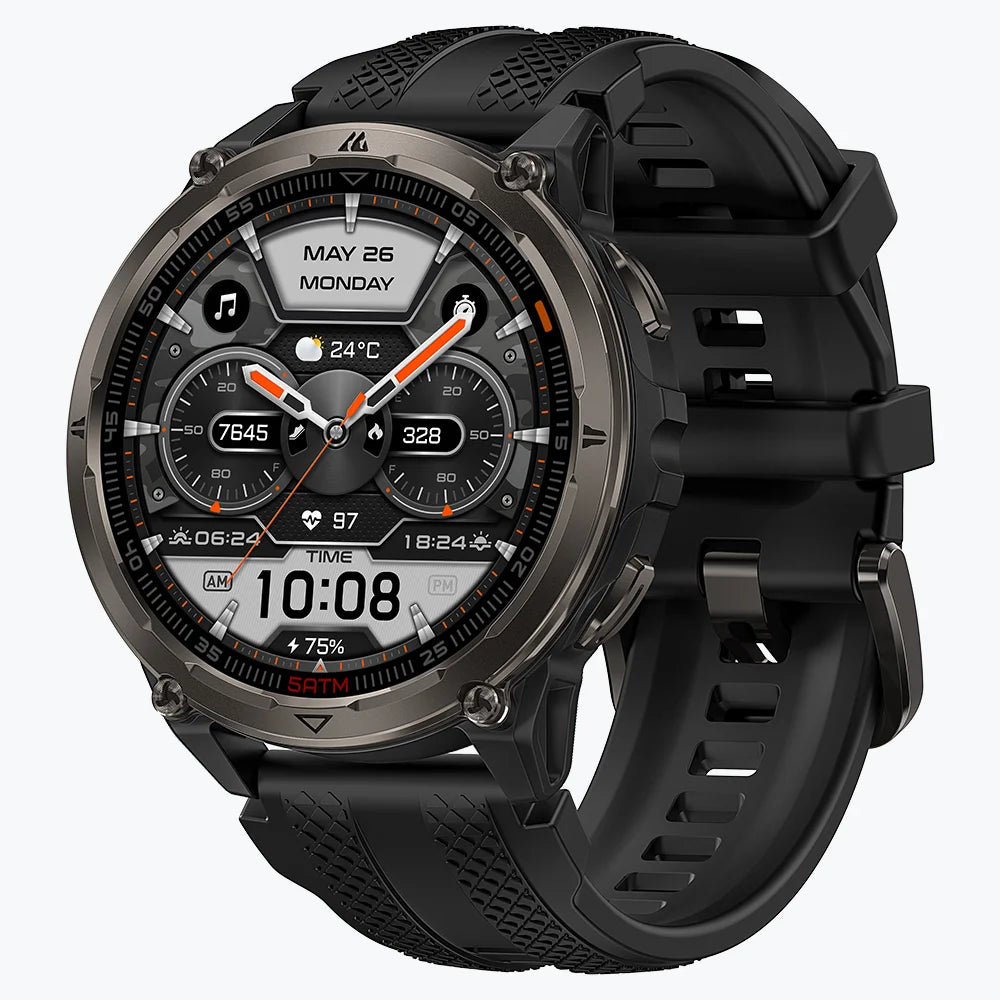
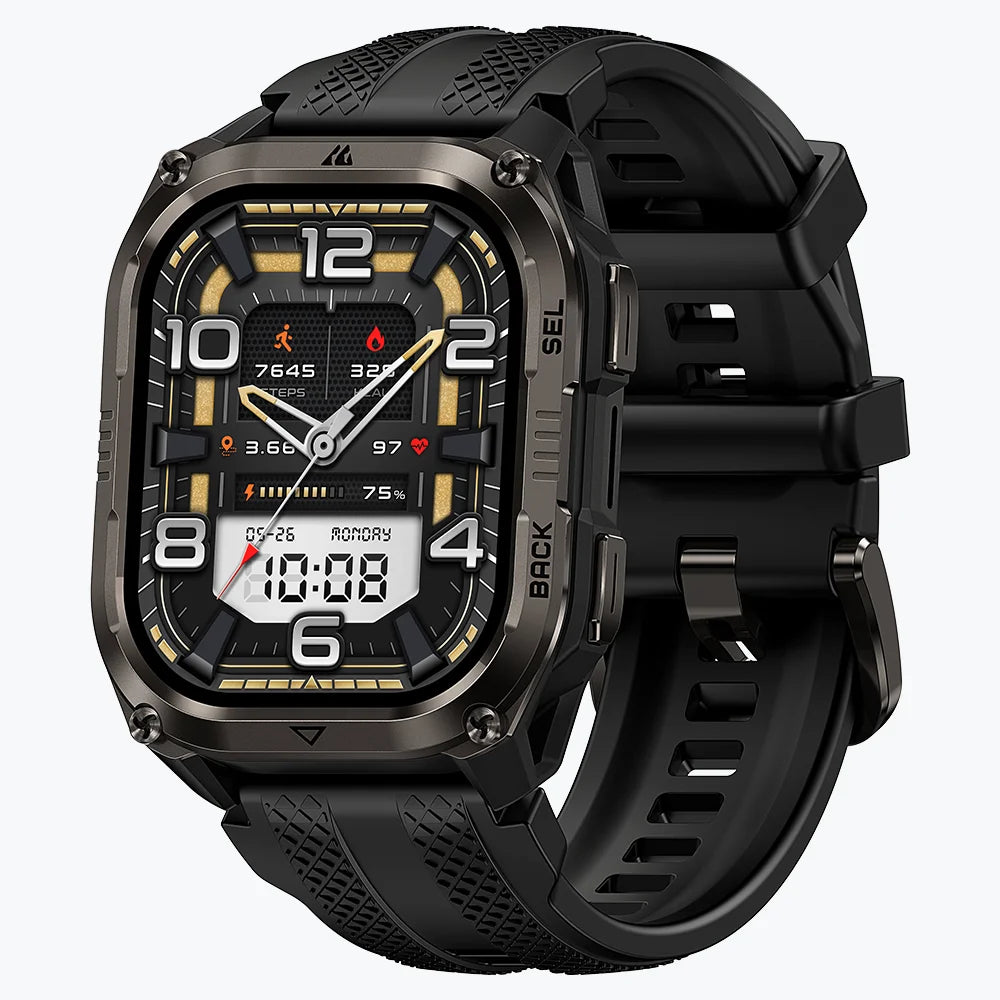
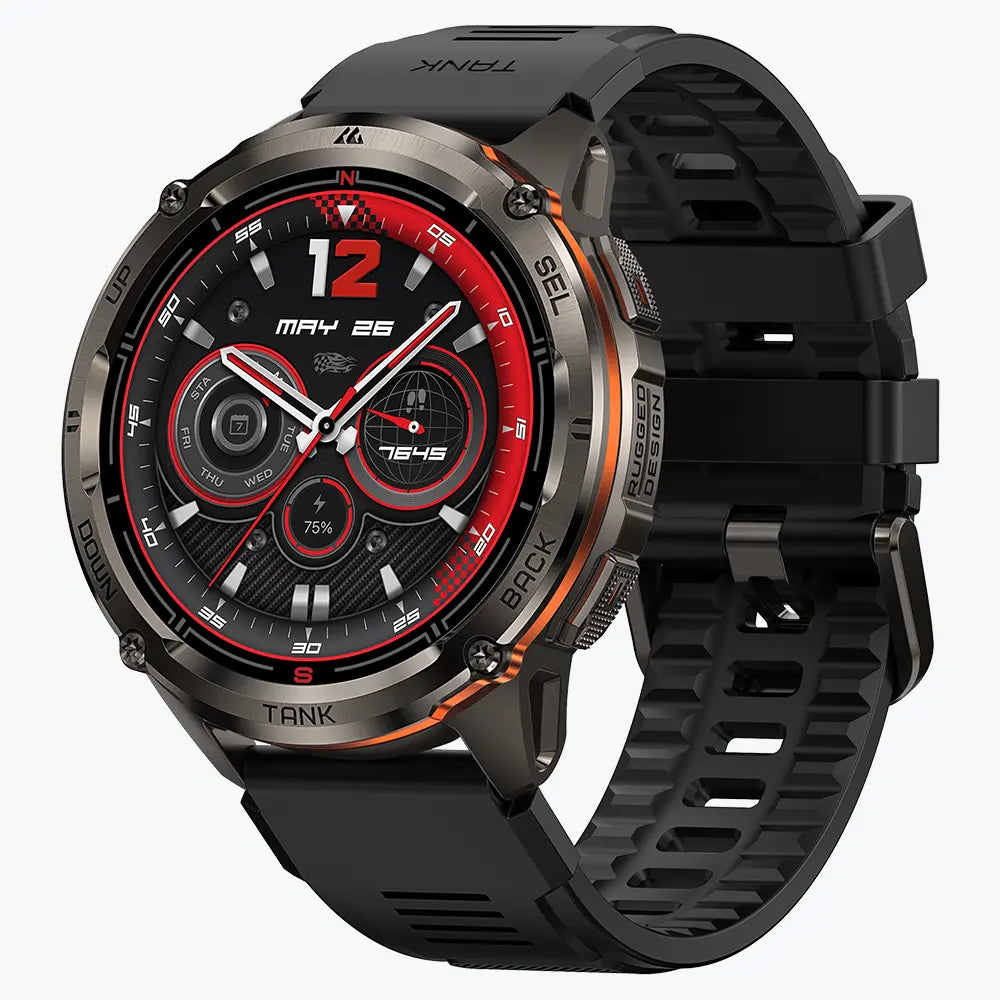
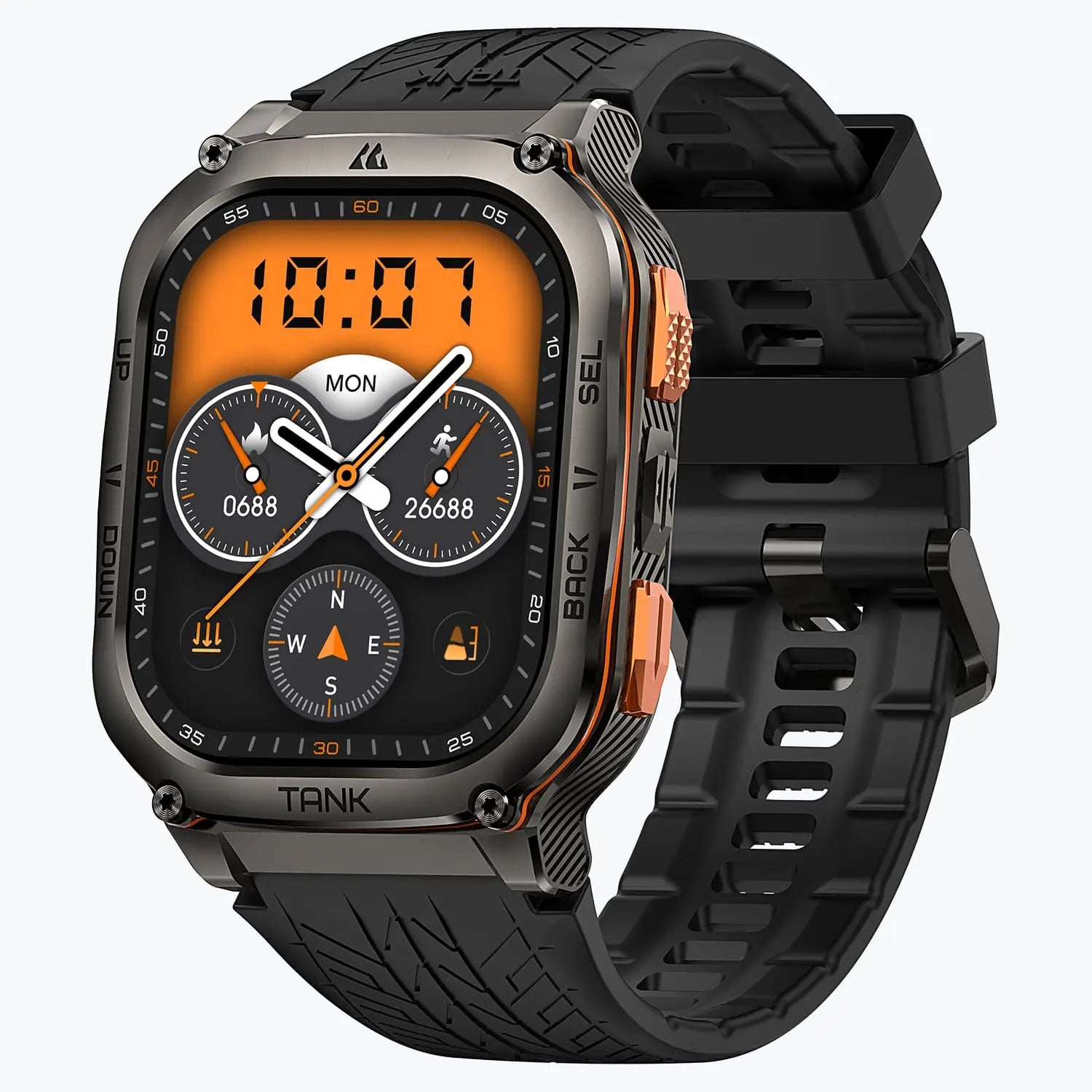
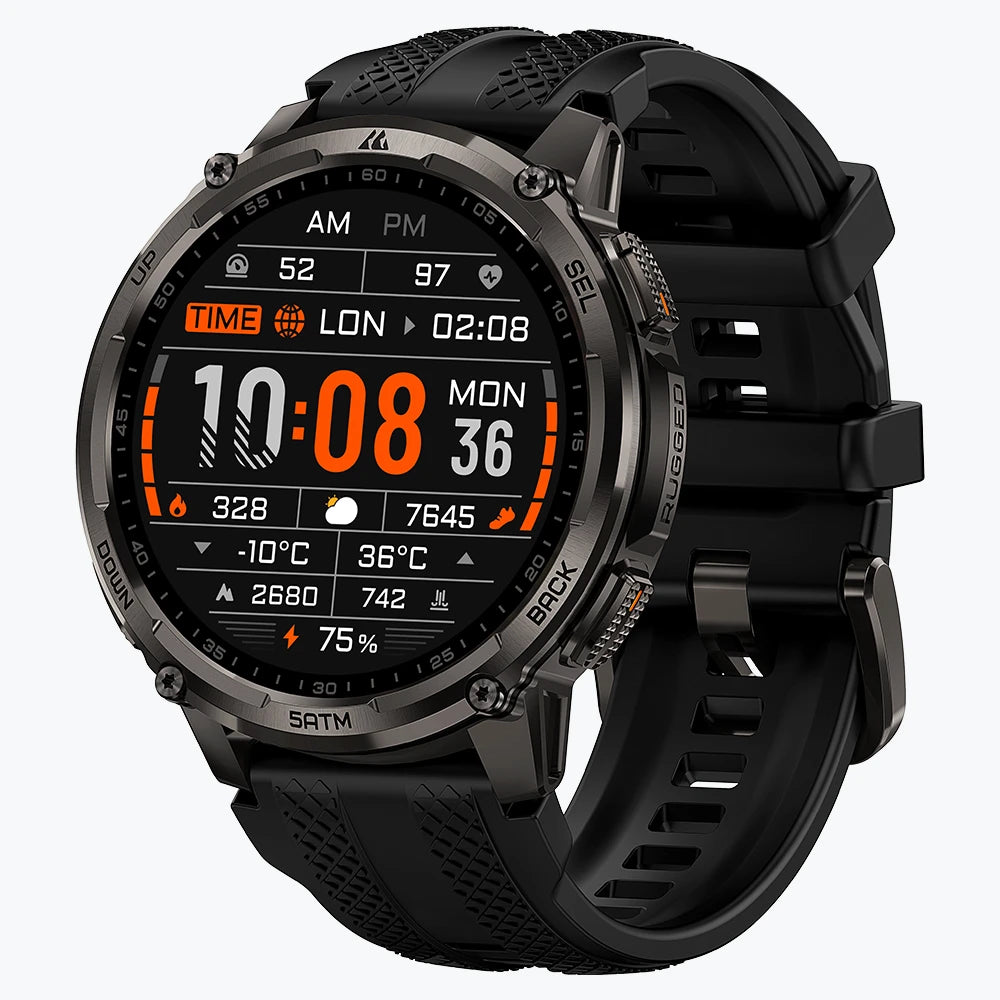
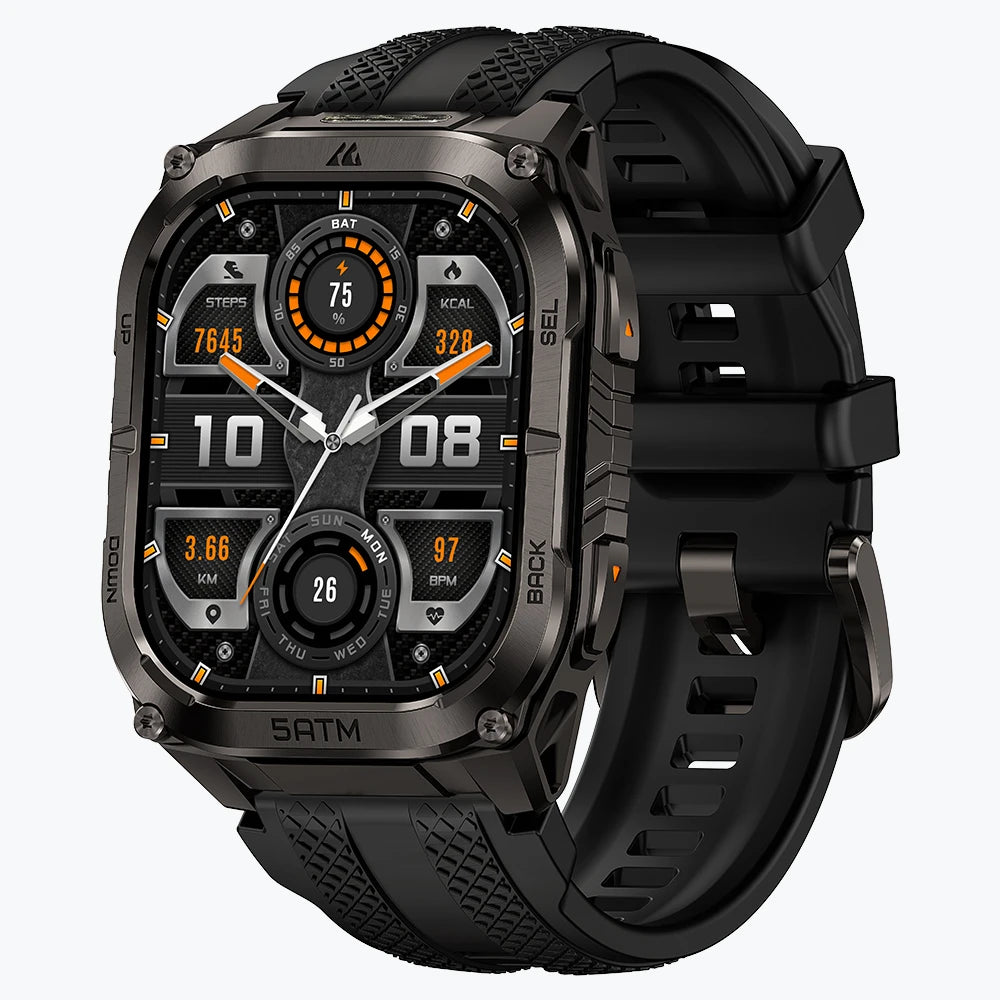
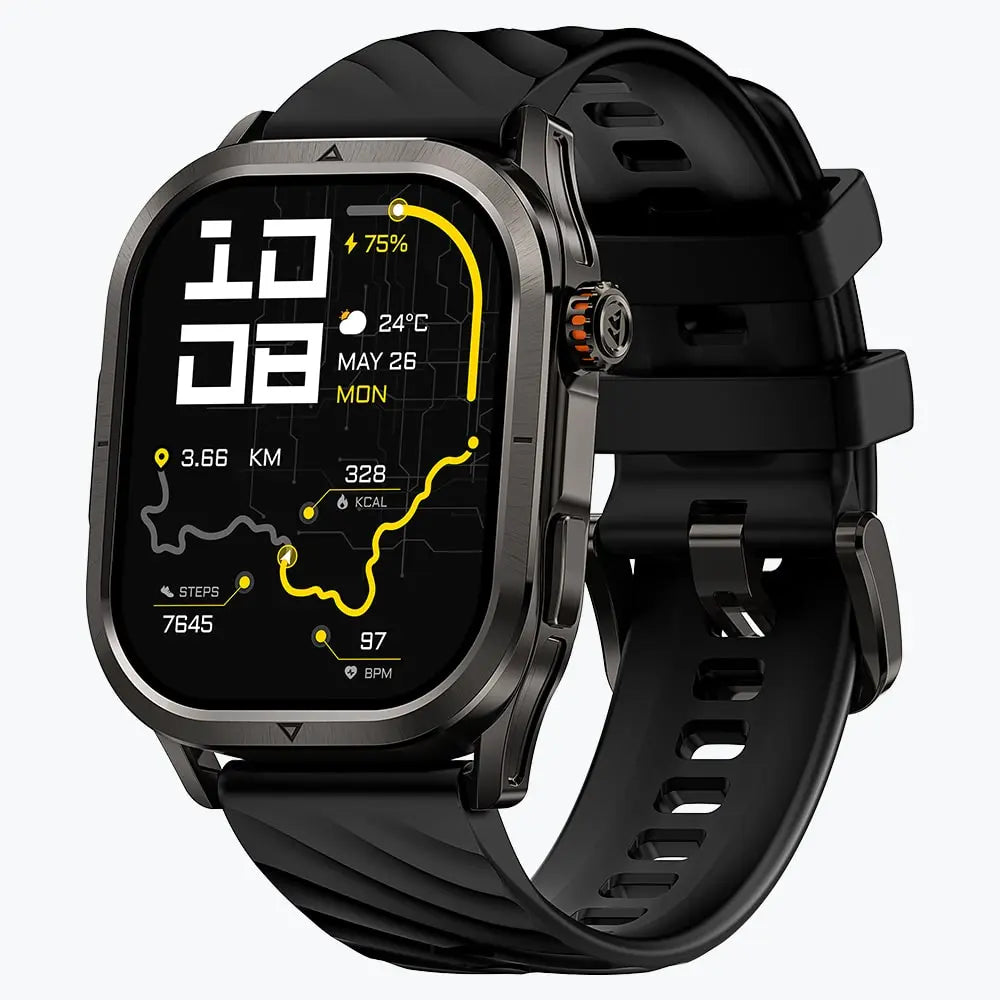


Based on published specifications, Orb 2 is the most suitable rugged smartwatch for technicians who frequently climb ladders and crawl through tight spaces. It combines the lowest published body weight of the four models with a comparatively slim case, a simple control layout, an adjustable LED flashlight and walkie-talkie support.
These qualities match work that rewards low wrist load and immediate on-wrist utility. T4C, T4 and T4SE serve different priorities, but Orb 2 is the closest match for this specific movement pattern.
{{table-of_contents}}
What Does a Rugged Smartwatch Need for Ladder and Crawl-Space Work?
Low Weight for Stable Wrist Movement
Low weight should be the first consideration because the watch moves with every reach, grip and wrist rotation. During repeated climbing and crawling, a lighter watch places less additional mass at the end of the arm and is less likely to feel cumbersome over a full shift.
A Low-Profile Case with Fewer Snag Points
A compact case with fewer protruding controls is easier to position under gloves and workwear cuffs. Published dimensions cannot show the full snag risk; crown shape, button guards, strap fit and workwear cuffs should be checked before purchase.
Hands-Busy Controls and Low-Light Utility
Useful controls should reduce the need to retrieve a phone during stationary task work. An integrated flashlight can provide immediate local illumination for labels, tools or nearby equipment, while physical controls remain accessible when touchscreen operation is inconvenient.
These functions should be activated before climbing or entering a confined area. Operating the watch while actively moving would work against the hands-focused nature of the task.
Sufficient Protection Without Unnecessary Bulk
Rugged protection should match the conditions the worker actually encounters. Resistance to dust, rain and everyday knocks is relevant, but protection ratings should be considered alongside weight and case size rather than automatically overriding them.
Why Does Orb 2 Fit This Rugged Smartwatch Use Case?
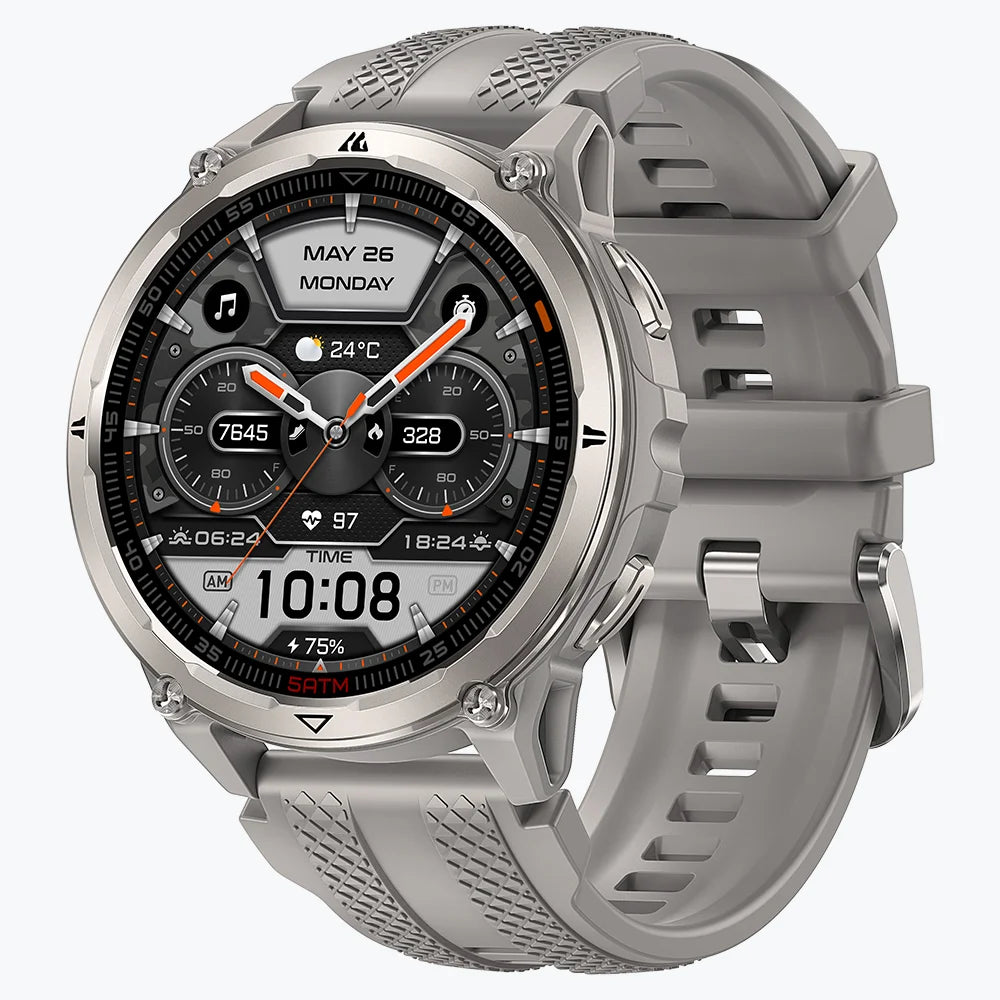
KOSPET Orb Smartwatch
$79.99 USD
Less Wrist Bulk During Climbing and Crawling
Orb 2 fits this use case because its published body weight is the lowest and its listed case is the slimmest of the four. The watch sits near the outer end of the arm, so its mass is carried through every overhead reach, change of grip and movement through a narrow opening.
For technicians who repeat these movements throughout the day, weight is more relevant than adding features that do not directly support the task. Orb 2 therefore answers the central buying question through its physical configuration, not through the length of its feature list.
Work Tools That Reduce Phone Handling
Orb 2 keeps two relevant technician tools directly on the wrist: an adjustable LED flashlight and walkie-talkie support. The flashlight can provide quick local illumination when checking a label, finding a tool or looking inside nearby equipment.
The walkie-talkie can also reduce phone handling when coworkers use compatible devices. Neither function should be operated while actively climbing; its practical value comes during preparation or stationary work.
Rugged Protection for Everyday Technical Work
Orb 2 combines its lower weight with published water and dust resistance, SGS-tested durability, Corning Gorilla Glass and a metal bezel. This construction is relevant to everyday knocks, vibration, dust and rain without changing the watch into a much heavier protection-focused model.
These ratings describe the watch, not the wearer’s level of protection. Orb 2 is a consumer device and should never be treated as electrical PPE or a substitute for site-specific safety equipment.
Where Orb 2 Has Limitations
Orb 2 is a focused recommendation rather than a universal one. Workers who require higher published water protection, construction-centered controls or advanced navigation for remote outdoor activities may reasonably prioritize a different model.
Those needs represent different buying priorities. When the question is limited to frequent ladder climbing and crawl-space access, Orb 2 remains the closest match because its design places greater emphasis on lower wrist load.
Rugged Smartwatch Comparison: Orb 2 vs. T4C, T4, and T4SE
These four models are designed around different priorities. For ladder and crawl-space work, the relevant comparison is wrist weight, case profile, external controls and low-light utility—not which watch has the longest overall specification list.
| Model | Published case size | Weight without strap | Physical buttons | Dedicated LED flashlight | Published protection | Use-case focus |
|---|---|---|---|---|---|---|
| Orb 2 | 48 × 48 × 12.7 mm | 41 g | 2 | Five adjustable levels | 5 ATM, IP69; tested against 12 MIL-STD-810H standards | Ladder and confined-space work where lower wrist weight matters |
| Tank T4C | 49.5 × 50.5 × 13.05 mm | 60.7 g | 4 | Five adjustable levels | 5 ATM, IP69K | Construction-site utility and demanding daily work |
| Tank T4 | 48.6 × 48.6 × 13.7 mm* | 77 g | 4 | No dedicated LED listed | 10 ATM, IP69K; tested against 20 MIL-STD-810H standards | Outdoor sports, navigation and higher-protection use |
| Tank T4SE | 48.6 × 48.6 × 13.7 mm* | 77 g | 4 | No dedicated LED listed | 10 ATM, IP69K; tested against 20 MIL-STD-810H standards | Outdoor riding, work and everyday wear |
T4C Fits Construction-Site Priorities
- T4C suits construction workers who prioritize job-site utility, physical controls and protection for demanding working conditions.
- When repeated ladder climbing and crawl-space access define the workday, Orb 2’s lighter and simpler published configuration provides a closer match.
T4 Serves Demanding Outdoor Conditions
- T4 suits users who value higher published protection, outdoor navigation and advanced sports functions.
- When the selection is narrowed to keeping wrist load low during climbing and crawling, Orb 2 aligns more directly with that movement requirement.
T4SE Moves Between Work and Everyday Wear
- T4SE suits users who want one rugged smartwatch for work, outdoor activities such as desert riding, and everyday wear.
- When the main requirement is frequent ladder and crawl-space movement, Orb 2’s lower published weight makes it the more focused option.
How Can a Rugged Smartwatch Reduce Snag Risk While Working?
- Keep the Watch Secure Against the Wrist
Wear the watch close enough to prevent excessive movement, but not so tightly that it restricts circulation or wrist motion.
- Secure the Strap Tail and Buckle
Place the strap tail fully inside its keeper and confirm that the buckle cannot shift before entering a tight space.
- Check the Crown and Buttons Before Entering Tight Spaces
Test the watch with the actual glove and workwear cuff combination to confirm that the case, controls and strap remain covered and stable.
- Avoid Operating the Watch While Climbing
Do not read or operate the watch while climbing. For U.S. workplaces, OSHA’s ladder guidance requires at least one hand to grasp the ladder and explains the intention of maintaining three points of control.
For electrical hazards and occupation-specific precautions, follow employer procedures and refer to the separate guide to choosing a rugged smartwatch for electricians.
FAQs
Does Wrist Size Matter When Choosing a Rugged Smartwatch for Crawl-Space Work?
Yes. A case may meet the right weight and thickness requirements but still overhang, rotate or press against the wrist if its shape does not match the wearer’s wrist width. Compare the complete case footprint—not only the screen diameter—and test it with the gloves and sleeves worn at work.
Can a Rugged Smartwatch Work Without Mobile Service in a Mechanical Room?
Functions stored on the watch, such as the clock, timer, flashlight and locally recorded data, can operate without mobile service. Phone notifications and Bluetooth calls still require a connected phone, while walkie-talkie communication requires compatible devices and may be affected by walls, machinery and other physical obstructions.
Are Rugged Smartwatches Allowed on Construction Sites or in Industrial Facilities?
Site rules determine whether a smartwatch can be worn. Some workplaces restrict wrist-worn items or wireless devices around rotating machinery, electrical hazards, controlled areas or specialized PPE, so technicians should confirm employer requirements before wearing one on the job.